

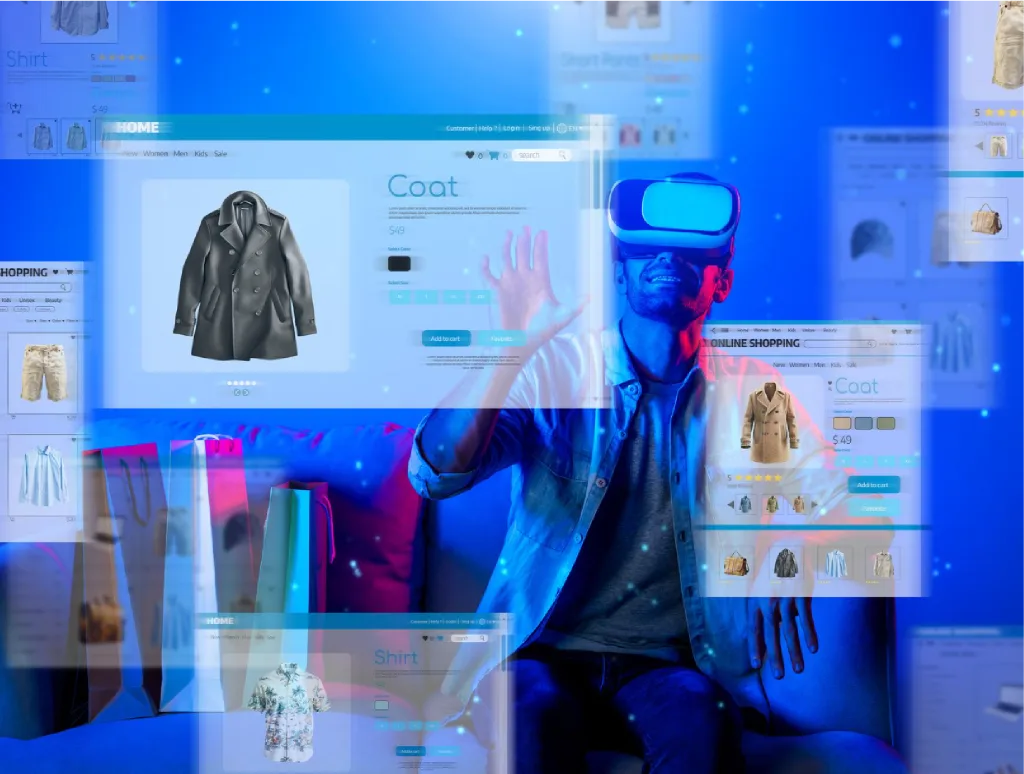
Digital retail has transitioned from a simple alternative to brick-and-mortar stores into the primary engine driving global commerce. What once began as basic catalog websites with digital shopping carts has transformed into an intricate ecosystem powered by real-time data, artificial intelligence, and immersive digital environments. Consumers no longer just buy products online; they interact with brands through highly personalized, continuous digital experiences across multiple devices and platforms.
As consumer expectations shift toward speed, transparency, and hyper-personalization, retail businesses are forced to innovate rapidly. Modern shoppers demand seamless transitions between digital channels and physical store locations, instant customer support, and tailored product recommendations that anticipate their needs. Understanding the key trends reshaping the digital retail landscape is essential for brands striving to maintain relevance in an increasingly competitive marketplace.
Hyper-Personalization and Predictive AI Shopping
Artificial intelligence is fundamentally changing how shoppers discover, evaluate, and purchase products online. Early digital retail personalization relied on basic collaborative filtering, such as showing shoppers items that other users bought. Today, predictive AI systems analyze vast amounts of real-time data, including browsing history, location, past purchases, localized weather conditions, and even social media engagement to deliver individualized shopping experiences.
Key elements driving AI-powered personalization include:
- Dynamic Web and App Interfaces: Online store interfaces that alter their layouts, featured product banners, and navigation menus based on individual user preferences and historical behavior.
- Predictive Reordering: Algorithms that calculate consumption rates for household items or personal care products, prompting consumers with perfectly timed automated replenishment reminders.
- Algorithmic Styling and Curated Outfits: Virtual wardrobe assistants that automatically generate complete outfit combinations or complementary product bundles based on a customer’s individual aesthetic tastes.
By serving tailored content at the exact moment of intent, digital retailers significantly boost conversion rates, lower customer acquisition costs, and foster long-term brand loyalty.
Augmented Reality and Immersive Virtual Try-Ons
One of the historical hurdles facing online retail has been the inability of customers to inspect, touch, or try on physical items before completing a purchase. Augmented reality and spatial computing technologies are dismantling this barrier by bridging the gap between digital convenience and physical interaction.
Using smartphones, tablets, or wearable displays, consumers can now visualize digital renderings of products layered directly over their physical environments or their own bodies:
- Virtual Apparel and Makeup Fitting: Advanced computer vision software projects lipstick shades, eye makeup, foundation matches, clothing items, and eyewear onto a customer’s live video stream in real time.
- 3D Home Furnishing Placement: Spatial mapping tools allow shoppers to drop true-to-scale, three-dimensional models of furniture, rugs, and decor items directly into their living spaces to evaluate scale, lighting, and aesthetic fit.
- Interactive Product Unboxing: Immersive 3D web viewers let consumers rotate, zoom, and open digital product packages to examine internal engineering features, textures, and dimensions before ordering.
By giving buyers greater certainty regarding how products will look and perform in real life, augmented reality reduces return rates significantly, saving retailers millions in reverse logistics costs.
Social Commerce and Live Video Shopping
Social media platforms are no longer just advertising spaces designed to redirect traffic to external storefronts. Instead, they have evolved into fully functional commerce ecosystems where the entire buying journey, from discovery to checkout, occurs natively within the social application.
Social commerce leverages the power of community, influencer authority, and instant entertainment to drive spontaneous impulse purchases:
- In-App Native Checkouts: Seamless checkout integrations that store payment and shipping details within social media apps, allowing users to buy featured items with a single tap without interrupting their browsing session.
- Live Interactive Stream Shopping: Live video broadcasts hosted by brand representatives, subject matter experts, or influencers who showcase products, answer audience questions in real time, and offer exclusive, limited-time flash discounts.
- Shoppable Video Content: Short-form video reels and posts embedded with interactive product tags, enabling users to click on any item worn or used in the video to purchase it instantly.
This fusion of entertainment and shopping transforms passive media consumption into active commerce, appealing particularly to younger generations who view shopping as a social, communal activity.
Voice Commerce and Conversational Retail
As natural language processing and voice recognition technologies continue to refine their accuracy, conversational retail is becoming a natural extension of daily living. Consumers are increasingly comfortable using smart home speakers, mobile voice assistants, and AI chatbot agents to search for products, reorder household essentials, and track delivery status.
Conversational interfaces offer distinct advantages for busy consumers seeking hands-free convenience:
- Frictionless Reordering: Voice-activated purchases allow users to reorder frequently used items simply by speaking a brief command to their smart home devices.
- AI Shopping Concierges: Generative AI chatbots capable of holding nuanced, contextual conversations, answering complex technical questions, and narrowing down large product catalogs based on specific conversational constraints.
- Voice-Search Search Engine Optimization: E-commerce stores are optimizing product listings for long-tail, natural speaking queries rather than traditional, fragmented search keywords.
By making search and checkout as simple as holding a casual conversation, conversational retail removes mechanical friction from the purchasing funnel.
Sustainable E-Commerce and Conscious Consumerism
Modern consumers are increasingly evaluating brands based on their environmental impact, ethical sourcing practices, and corporate transparency. As the volume of global online deliveries continues to rise, the environmental footprint associated with packaging waste, return transportation, and carbon emissions has come under intense public scrutiny.
In response, forward-thinking digital retailers are implementing eco-conscious initiatives throughout their supply chains:
- Eco-Friendly Packaging: Replacing single-use plastics and non-recyclable shipping materials with biodegradable, compostable, or reusable shipping bags and boxes.
- Carbon-Neutral Shipping Options: Offering customers the ability to opt into carbon-offset fees at checkout, funding reforestation efforts or renewable energy initiatives to neutralize delivery emissions.
- Consolidated Shipping Schedules: Encouraging shoppers to group multiple orders into a single weekly delivery window rather than requesting multiple individual express shipments.
Integrating sustainability into core business practices is no longer just a public relations exercise; it is a fundamental requirement for winning over climate-conscious shoppers.
Ultra-Fast Fulfillment and Autonomous Logistics
Customer expectations regarding order delivery speed have escalated dramatically. Standard multi-day shipping is quickly being replaced by same-day delivery, micro-fulfillment centers, and automated logistics networks operating in dense urban areas.
To keep pace with the demand for immediate gratification, retailers are investing heavily in advanced fulfillment infrastructure:
- Micro-Fulfillment Centers: Small, highly automated urban warehouses located within residential hubs that store high-demand inventory close to end consumers, enabling delivery windows under two hours.
- Autonomous Delivery Drones and Ground Robots: Self-driving delivery vehicles, delivery drones, and sidewalk robots deployed to handle last-mile delivery, bypassing urban traffic jams and lowering shipping costs.
- Predictive Inventory Routing: Machine learning models that forecast local demand spikes for specific products, pre-positioning inventory in regional fulfillment hubs before local orders are even placed.
These logistical breakthroughs reduce shipping delays, optimize warehouse space, and provide retailers with a decisive competitive advantage in local markets.
Frequently Asked Questions
What is the difference between multi-channel retail and omnichannel retail?
Multi-channel retail refers to a brand selling products across several separate channels, such as a physical store, a website, and a mobile app, where each platform operates independently. Omnichannel retail integrates all these sales channels into a unified system, allowing data, inventory levels, customer accounts, and order histories to sync seamlessly across every digital and physical touchpoint.
How does conversational commerce protect user privacy during voice purchases?
Conversational commerce systems protect user privacy through multi-factor authentication, biometric voice pattern recognition, and encrypted payment gateways. Users typically must confirm orders using a secure passcode, a secondary confirmation prompt on their mobile device, or biometric verification before any financial transaction is authorized.
Why are product return rates significantly higher in online shopping compared to physical stores?
Online shopping return rates are typically higher because consumers cannot physically try on garments, test product functionality, or verify true colors before purchasing. This often leads to bracketing, a behavior where shoppers order multiple sizes or colors of the same item with the intention of returning whichever ones do not fit.
How are small independent businesses competing with massive digital marketplaces?
Small businesses compete by offering niche product specialization, superior customer service, authentic brand storytelling, and hyper-personalized shopping experiences. They also leverage accessible third-party platform tools to access advanced fulfillment, payment processing, and marketing automation without building proprietary software from scratch.
What is headless commerce and why are online retailers adopting it?
Headless commerce is an architectural framework where the front-end user experience of a website or mobile app is decoupled from the back-end commerce engine and database. This separation allows retailers to modify digital interfaces, launch new sales channels, and customize user experiences rapidly without disrupting core administrative operations or site stability.
Will virtual reality completely replace physical store shopping in the future?
Virtual reality is unlikely to replace physical shopping entirely, as brick-and-mortar stores offer unique sensory experiences, immediate product possession, and personal social interactions. Instead, virtual reality will coexist alongside physical stores, serving as an interactive channel for immersive product exploration, digital events, and remote consultation.
How are flexible payment methods changing online buying behavior?
Flexible payment options, such as buy-now-pay-later services and digital wallets, break down large purchase amounts into smaller, interest-free installments or offer one-click checkout options. This lowers initial financial barriers, increases average order value, reduces shopping cart abandonment rates, and makes higher-priced goods accessible to a broader demographic.